
GenoMed4All reaches the end of its journey
Today, the GenoMed4All project officially ends… but its legacy will remain for years to come!
Clinicians, researchers, health tech innovators, engineers and data experts have been working together since the project began in January 2021 with one clear goal in mind: to develop a Federated Learning platform built on clinical data and powered by novel AI models to advance precision medicine in hematology.
After a journey of 4.5 years, our EU-funded initiative draws its curtain on a high note, celebrating the achievements jointly made by the 23 partner institutions from Spain, Italy, Germany, France, Cyprus, Greece and Denmark.
We’d like to express our gratitude to the full GenoMed4All consortium for their efforts in these last years, and also to the European Health and Digital Executive Agency (HaDEA), ERN-EuroBloodNet and many others for their invaluable support!
Upon reaching the final stages, we asked some of the minds behind the project to reflect on the lasting impact of the work carried within the context of GenoMed4All. This is what they had to say.

GenoMed4All holds 7th General Assembly as project nears completion
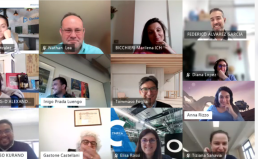
The GenoMed4All consortium held its 7th General Assembly on 8th April 2025, gathering all project partners for an online meeting to share progress updates and reflect on the project’s concluding months. As GenoMed4All moves toward its end in June, the assembly provided a valuable opportunity to align on key achievements, deliverables, and lasting impact across the project’s core work packages (WPs).
An ethical and compliant framework for clinical data
Nathan Lea (The European Institute for Innovation Through Health Data) opened the session with reflections on the evolving ethical and legal framework for AI in healthcare. Since 2022, GenoMed4All has adapted its approach to align with the incoming EU AI Act. Using the Assessment List for Trustworthy AI (ALTAI), the i~HD team produced a series of recommendations to guide the ethical development and deployment of AI in clinical contexts. These include principles on transparency, quality assurance and stakeholder engagement.
The final deliverable for WP2 consolidates these efforts by providing: an overview of the AI landscape in healthcare, a review of the AI technologies and algorithms developed in GenoMed4All, clinical use case insights, and forward-looking recommendations for high-risk AI systems in health. Nathan emphasized that this work will also support future EU initiatives, including sister project SYNTHEMA.
Catalina Gonzalez (Dedalus) and Elisabetta Sauta (Humanitas Research Hospital) shared the latest progress done as part of WP5, focused on anonymization tools and data harmonization. Their work ensures the privacy of clinical data in line with the ethical framework outlined by WP2, and enables a consistent pipeline for semi-automated data curation across various partner institutions.
Key contributions of this work package include: bioinformatics pipelines tailored to the project’s three use cases (MDS, SCD and MM); the development of a common data model for each use case based on HL7 FHIR standards; and ETL pipelines for extracting, harmonizing and integrating clinical, genomic and imaging data with the Federated Learning infrastructure.
Advancing AI and Federated Learning for personalized medicine
Silvia Uribe (Universidad Politecnica de Madrid), leader of WP4, explained how her team has been working on the design and implementation of the Federated Learning platform. This infrastructure will enable secure data sharing and AI model deployment across multiple institutions while maintaining data sovereignty, powered by high-performance computing (HPC) capabilities.
The team from University of Bologna (UNIBO), led by Gastone Castellani, has also made major contributions to the FL infrastructure, especially on AI model development for the the three clinical use cases. In close collaboration with Patricia Alonso (UPM), their work on WP6 has focused on: validation protocols to standardize AI testing, synthetic data generation for enhanced FL training and simulations, and the implementation of centralized AI algorithms for each use case. Luciana Carota (UNIBO) also highlighted the collaborative effort behind the development and testing of federated models, integrating data from partners across the consortium.
Gianluca Asti and Marilena Bicchieri (Humanitas Research Hospital) presented updates from WP7, emphasizing the deployment of AI for genomics-based predictions, particularly for the two oncological use cases: for MDS, it demonstrated an improved model performance in federated environments, even in an extreme scenario where some of the nodes in the federation has incomplete or missing data; for MM, they achieved successful simulation of early relapse scenarios using synthetic data. Overall, this work package underscores the power of federated learning to handle complex, high-dimensional genomic and imaging data.
Data standardization, open science and impact
Teresa García (Centre for Genomic Regulation) reported on progress in genomic data standardization, which is critical for continuous AI model training and the FAIRification of healthcare data; in this area, as she highlighted, one of the main challenges has been harmonizing heterogeneous datasets and terminologies across domains. To complement this work, Elisa Rossi (CINECA) remarked that parallel efforts have been taken to promote open data collaboration across the project.
As part of ongoing commitments to share the project’s efforts and achievements with the wider healthcare community and patient groups, a series of outreach and dissemination activities have been carried out throughout the last years, which have also supported capacity-building in data handling and open science practices. More recently, the team led by Mar Mañú (Vall d’Hebron Institute of Research) organised the second wave of training on AI in Hematology for an expert audience, co-hosted with and supported by ERN-EuroBloodNet.
Also to increase the project’s awareness among external audiences, Diana Lopez (AUSTRALO) explained how a series of communication strategies have been planned and implemented since the beginning of the project, including social media campaigns, website updates, and the ongoing management of the Zenodo repository. The AUSTRALO team has also developed an onboarding handbook to guide new clinical sites interested in joining the GenoMed4All platform.
To close the session, Anna Rizzo (Datawizard) spoke about the project’s exploitation plans and long-term vision, including integration with ERN-EuroBloodNet for continued use and development of the GenoMed4All platform.
Looking ahead
With the final months ahead, the GenoMed4All community is preparing for its presence at the European Hematology Association (EHA) Congress 2025 in Milan on 12–15 June, alongside colleagues from SYNTHEMA and ERN-EuroBloodNet.
Stay tuned for more updates as GenoMed4All enters its final chapter.

Upcoming webinar series: GenoMed4All & ERN-EuroBloodNet Educational program on AI in hematology for an expert audience
Our Educational Program is back!
The second wave of our training webinar series is coming up soon – key experts in the application of Artificial Intelligence in the field of Hematological Diseases will be present, don’t miss out!
Our Training Program – Looking back on Wave #1
The GenoMed4All & ERN-EuroBloodNet Educational program on Artificial Intelligence in hematology introduced the public to GenoMed4All’s mission and explore the various applications of Artificial Intelligence in biomedicine. This program covered a range of topics, starting from defining precision medicine and problem-solving methodologies to discussing the utilisation of multi omics (including Genomics, Metabolomics, Proteomics, and Radiomics) in clinical research. Specific use cases such as Myelodysplastic syndromes (MDS), Sickle Cell disease (SCD), and Multiple myeloma (MM) were highlighted.
Additionally, the program delved into strategies for standardising data and establishing cross-border connections between repositories. It also explored the application of Artificial Intelligence in diagnosis, early risk assessment, and predicting disease progression using a multi-modal approach.
Here is a summary of all 4 previous sessions. Follow us on our social media channels for the latest updates!
Session 1: ‘GenoMed4All & ERN-EuroBloodNet for Precision Medicine in Hematology’
How can Artificial Intelligence help advance personalised medicine in diagnosing and treating haematological diseases?
Our training series started with an introduction to the concept of precision medicine, highlighting its promise in tailoring medical treatment to individual characteristics. We discussed how advancements in genomics, proteomics, and other ‘omics’ technologies help pave the way for personalised approaches to diagnosis, treatment and prevention. It also tackled the obstacles that can be encountered in this process, such as data transfer and interoperability.
Session 2: ‘Uses cases challenges: MDS, SCD and MM’
In terms of the practical use of AI, how can it help them manage and extract insights from clinical data? How can the data be validated from both a legal and ethical standpoint? How will GenoMed4All’s 3 disease use cases minimise the negative impact of unharmonised, scattered and incomplete data?
Due to their rarity, many healthcare professionals may lack awareness and understanding of certain hematological diseases like Myelodysplastic Syndromes (MDS), Sickle Cell Disease (SCD) – this session provided answers on how our use cases approach these critical issues.
Session 3: ‘Data Standardization & Linkage‘
What is the current situation? How could rare disease clinical data disparity be a problem but also an opportunity? Find out the new paradigm: think outside the box. Have you heard of a Federated Learning model?
In this session, we learned that Federated Learning is a Machine Learning approach in which, instead of gathering all the data in one centralised location, the model is trained across multiple decentralised devices or servers holding local data samples. These devices or servers collaboratively learn a shared model while keeping the data localised. This approach offers privacy benefits since the data remains on the device or server where it originates, and only model updates, not raw data, are exchanged between the devices and the central server. This way, sensitive data can remain on the local device, such as in the hospitals, ensuring privacy and security. This is particularly useful in scenarios where data privacy is a concern, such as in healthcare. It enables collaborative model training across a network of devices while keeping sensitive data decentralised and secure. FL represents an innovative way to harness the collective intelligence of distributed data sources while respecting privacy and data locality constraints.
Session 4: ‘Data Integration & Analysis (Artificial Intelligence)’
How to achieve faster advances in medical research?
Data integration and analysis play a critical role in the machine learning pipeline. Before training a model, data must be integrated and analysed to identify relevant features, pre-process input data, and engineer new features that may enhance the model’s performance. Moreover, analysing the model’s predictions and performance on test data is essential for evaluating its effectiveness and identifying areas for improvement. In this session, we explored how researchers and practitioners can implement data integration strategies and the different approaches applied in hematology when using AI tools, specifically in MDS and MM use cases. In GenoMed4All, model updates from different devices are aggregated to create a global model without sharing raw data, and furthermore, different models and scenarios are analysed aiming to get explainable results. This way, we can keep data private, foster global collaboration, provide treatment personalisation, and reduce costs.
Through this first webinar series, our aim was to provide a comprehensive overview of how AI is transforming personalised medicine and healthcare, opening up with new opportunities to use real-world data to advance research and improve patient care in specific diseases such as MDS, SCD and MM.
All in all, we hope that attendees gained a deeper understanding of the challenges and opportunities associated with AI-driven healthcare innovation, and we look forward to continuing the conversation and exploring further advancements at the intersection of AI and rare disease healthcare in future webinars.

GenoMed4All celebrates its 5th General Assembly online
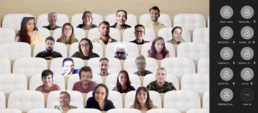
On 13 September 2023, the GenoMed4All consortium gathered virtually to share the most recent updates about our progress and discuss the plans that lie ahead for the coming months.
Project Coordinator Federico Alvarez, from Universidad Politécnica de Madrid (UPM), led the session where each Work Package leader presented their latest achievements and future actions. The key topics discussed included:
- Building an ethical, legal and trustworthy AI-based data protection framework, led by The European Institute for Innovation through Health Data (i-HD)
- Validating protocols to develop AI algorithms for personalized medicine in the context of hematological diseases, as being explored by the team at Università di Bologna
- Determining the specificities and validation of the 3 use cases (Myelodysplastic syndromes, Multiple Myeloma and Sickle Cell Disease), as well as data harmonization and testing plans carried by Humanitas Research Hospital
- Linking data repositories for the design of a Federated Learning framework and platform to develop, train and fine-tune AI algorithms and models with real-world patient data, led by the Telecommunications Engineering team at UPM
- Data engineering, anonymisation algorithms, curation and privacy preservation tools and pipelines for each of our use cases, as being defined by Dedalus
- Advancing genomics standardization, open science data and training, supervised by Centre for Genomic Regulation (CRG)
All partners are looking forward to meeting in Barcelona on 17-18 January 2024 for the next General Assembly, and continue working together to build the next generation of healthcare.
GenoMed4All highlighted as one of Europe’s top research programs during World Sickle Cell Day 2023
To commemorate this year’s World Sickle Cell Day, on 19th June, ERN-EuroBloodNet have put the spotlight on the European research and education initiatives fighting to improve the lives of individuals and families affected by this condition. We are very proud to see GenoMed4All listed alongside other EU-funded initiatives — including EVIDENCE, INHERENT, EDITSCD and our sister project SYNTHEMA — in this interactive poster created by ERN-EuroBloodNet to mark the occasion.
Mar Mañú Pereira, Principal Investigator at our partner institution Vall d’Hebron Institute of Research (VHIR), also introduced the work carried out by GenoMed4All’s consortium and the other four projects during a presentation to the Sickle Cell Disease Spanish Association (ASAFE) earlier this week, coinciding with ERN-EuroBloodNet’s campaign in celebration of World Sickle Cell Day 2023.
According to the Global Alliance of Sickle Cell Disease Organizations (GASCDO), one of this year’s themes is dedicated to raising awareness about the latest technological advancements in the SCD field, helping patients and healthcare professionals to identify the current status of the disease. The partners involved in GenoMed4All believe that technology, especially Artificial Intelligence, holds the power to bring new and improved diagnosis and prognosis into the future of healthcare, which in turn will positively contribute to the future of those suffering from rare haematological diseases, such as Sickle Cell.

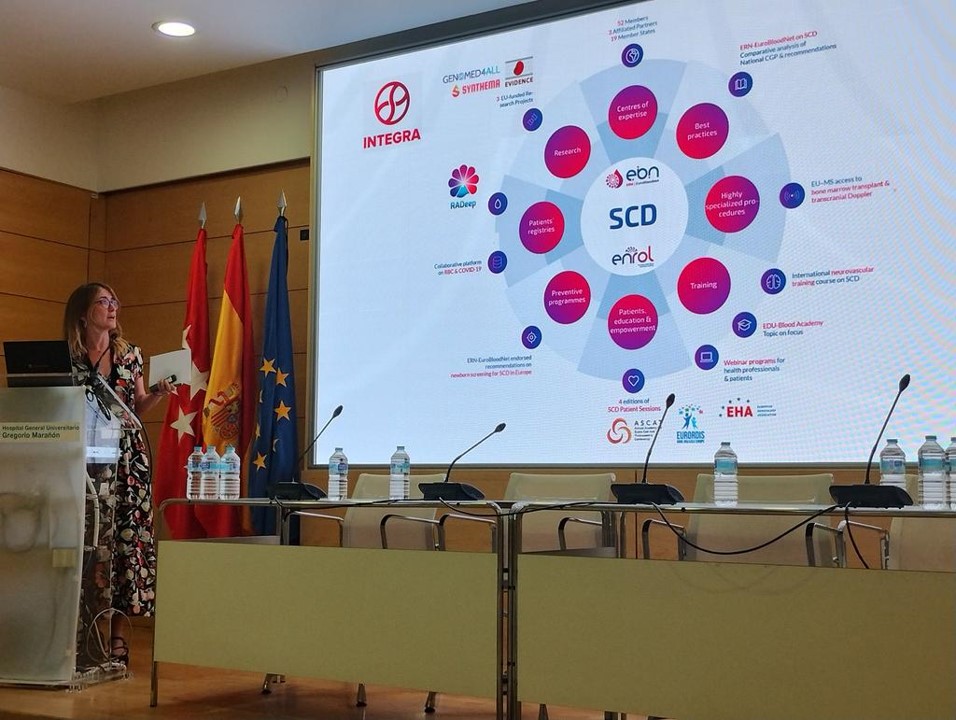

A brief introduction to our sister project SYNTHEMA
SYNTHEMA is a Horizon Europe research and innovation action that aims to establish a cross-border health data hub for rare haematological diseases (RHDs).
Haematological diseases are highly diversified, with oncological and non-oncological subcategories. The scarcity and fragmentation of patient data across scattered transnational repositories hinder effective health planning and make difficult to engage in basic and clinical research. SYNTHEMA aims to tackle this challenge by establishing a research platform connecting clinical centres of excellence in the research and care of RHDs, technical research centres, industries and SMEs, to advance translational and clinical research by generating and validating anonymised and synthetic data in RHDs.
To ensure data security and patients’ privacy, the project will make use of a federated learning (FL) infrastructure, privacy preserving by design, that will allow to iteratively train, refine and validate AI algorithms at hospital premises, without sharing of data outside local repositories. Also, it will equip it with secure multi-party computation (SMPC) protocols and differential privacy (DP), allowing distributed computation of mathematical functions between centres without revealing the underlying data.
SYNTHEMA will focus on two representative RHD use cases: sickle-cell disease (SCD), for non-oncological haematologic diseases, and acute myeloid leukaemia (AML) for haematologic cancers.
To make the project vision a reality, the research is articulated into five strategic objectives, as seen below:
- Provide novel methods and capabilities to generate synthetic multimodal clinical, omics, and imaging data for RHDs with a validated clinical result.
- Develop de-identification and anonymisation pipelines at the service of clinical research and care.
- Consolidate and scale-up the use of FL applications, SMPC and DP solutions for privacy-preserving local algorithm training and global model aggregation.
- Ensure ethical and GDPR compliance in anonymised and synthetic data-driven research in RHDs.
- Ensure wide uptake and scalability of the developed methodologies and tools through effective stakeholder engagement, dissemination and open science practices.
SYNTHEMA will contribute to existing data registries such as the European Rare Blood Disorders Platform (ENROL), the European Platform on Rare Disease Registration (EU RD Platform), and the European Rare Disease Registry Infrastructure (ERDRI) with data standards, pipelines, and shareable data assets, and support their long-term sustainability.
Visit their website and stay tuned to their social media channels, Twitter and LinkedIn!
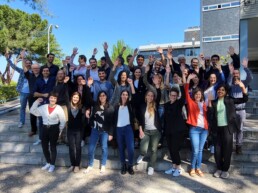
Our third General Assembly in Madrid
After nearly one year and a half of seeing each other online... we were finally able to meet in person for our third General Assembly!
Madrid was the chosen scenario and it did not disappoint in the slightest: sunny weather accompanied us throughout 2 days full of presentations, live discussions and brainstorming.
49 colleagues from our 23 partners got together to showcase the progress made on our use cases, AI modelling, data pre-processing and Federated Learning environment.
Here's to the next 6 months!



GenoMed4All supports Rare Disease Day 2022
Today (February 28th) is Rare Disease Day 2022!
At GenoMed4All, we are more than happy to join in the efforts to raise awareness and do our part in improving the lives of the 300 million people living with a rare disease worldwide.
Take a look at the communication below on how our project is committed to advancing research in rare diseases and don't forget to share your colours!
GenoMed4All supports Rare Disease Day 2022
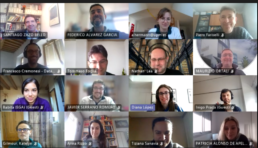
Kicking off 2022 with a second General Assembly
It's our first anniversary and there's no better way to celebrate than with a General Assembly! Though we could be together virtually, our ice-breaker pool made it clear: there's definitely a list of top destinations to choose from for a face-to-face meeting in the future.
After intense discussions on our use cases for Myelodysplastic Syndromes, Multiple Myeloma and Sickle Cell Disease, we discussed data sharing potentials, enjoyed a brainstorming session on our Federated Learning framework design principles... and started working through the details of our engagement strategy. The future is looking bright!

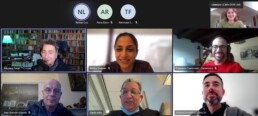
A first meeting for GenoMed4All's Ethics Advisory Board
Our Ethics Advisory Board convened yesterday for the very first time in our project and we could not have asked for better company! We had the opportunity to present an overview of GenoMed4All's first year of work for the consideration of our experts Mahsa Shabani, Paul Timmers and Nikolaus Forgó, who in turn provided some valuable directions and thoughtful insights on how to ensure that privacy and trustworthiness of AI models are at the forefront of our efforts to bring personalized care to hematological diseases.
Learn more about our experts' profiles here in our dedicated Advisory Board section!